← Home · In-Situ Testing

Field Permeability Testing (Lefranc/Lugeon) for Los Angeles Basin Soils

Together, we solve the challenges of tomorrow.

LEARN MORE →

The Los Angeles Basin is a deep alluvial trough filled with interlayered sands, silts and clays from the Santa Monica and San Gabriel Mountains—deposits where a single gravel lens can throw off a dewatering plan overnight. Downtown, you might hit a perched water table at 15 feet; over in the San Fernando Valley, groundwater sits deeper but the soils are often finer. That is why we run field permeability tests, not just a textbook estimate. When a contractor is designing a shoring system for a deep excavation near the LA River, we go out with the packer assembly and measure hydraulic conductivity directly in the borehole, using the Lefranc method for granular zones above the water table and the Lugeon procedure in fractured rock or stiff formations.

One borehole, three packer tests, and a clear vertical conductivity profile—that is what lets you size the sump pumps correctly.

Methodology and scope

The rig we dispatch across LA is a compact rotary drill with a double-packer system and a digital flow meter that reads down to 0.01 liter per minute—critical when you are testing low-permeability clayey silts in Westchester. For a standard Lefranc test we isolate a 30-inch section just above the bit, apply a constant head, and log flow until steady state is reached; three tests at different depths in the same boring give us a vertical profile of the aquifer. In weathered bedrock under the Hollywood Hills, we switch to the Lugeon protocol: five pressure steps per stage, pumping at up to 150 psi, with the packer seated in competent rock. The raw data goes straight into our field tablet and gets cross-checked against the Hvorslev shape factors before the crew leaves the site. We often pair this work with grain-size analysis of cuttings from the same hole to verify whether the in-situ results match the empirical correlations from Hazen or Kozeny-Carman.
Field Permeability Testing (Lefranc/Lugeon) for Los Angeles Basin Soils
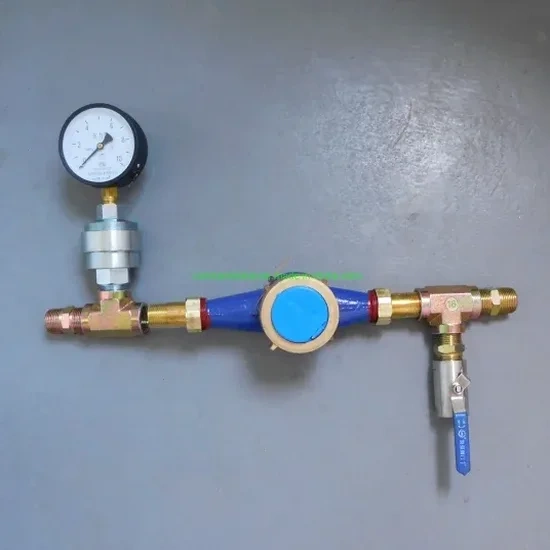
Technical reference image — Los Angeles

Local geotechnical context

Los Angeles has a long history of building on former wetland and alluvial fan deposits—think of the Ballona Creek watershed or the soft clays under Long Beach. When a project moves forward without reliable in-situ permeability data, the contractor ends up guessing on wellpoint spacing or the depth of a cutoff wall. We have seen excavations flood in the middle of August simply because a thin sand seam was missed during the desk study. An in-situ Lefranc test run across the critical horizons gives you a defensible K-value that holds up when the city's plan checker asks for the dewatering calculations. The Lugeon test is just as important for hillside projects: ignoring fractured rock can mean uncontrolled seepage into a hillside basement, activating a paleo-landslide that nobody budgeted for.

Need a geotechnical assessment?

Reply within 24h.

Email: info@geotechnicalengineering1.com

Watch the video

Reference parameters

ParameterTypical value
Test methodLefranc (constant/variable head), Lugeon (pressure-stage)
Applicable mediumGranular soils, weathered rock, fractured bedrock
Test interval length30 in (Lefranc), 10 ft (Lugeon standard)
Max injection pressure150 psi (Lugeon), controlled by formation depth
Flow measurement precision±0.01 L/min with in-line digital flowmeter
Data reduction standardHvorslev (1951) shape factors for Lefranc; Houlsby interpretation for Lugeon
Reporting outputK in cm/s per horizon, Lugeon units, pressure-flow plots

Other technical services

01

Lefranc Test in Boreholes

Constant or falling-head permeability measurement in soil, performed during a drilling pause. We isolate the test interval, fill the casing, and track drawdown with a pressure transducer, delivering K-values ready for dewatering modeling.

02

Lugeon Test in Rock

Multi-stage packer test for fractured and weathered bedrock, run at up to five pressure increments per stage. We record flow-pressure curves and interpret them following Houlsby criteria to distinguish between laminar flow, turbulent flow, dilation and wash-out behavior.

Reference standards

ASTM D6391 (packer test methodology), ASCE 7 (groundwater considerations), IBC Section 1803.5.4 (subsurface water condition), USBR 6510 (Lugeon test procedure), Caltrans Standard Specifications Section 19-3

Common questions

How much does a field permeability test cost in Los Angeles?

For a standard Lefranc or Lugeon test in LA County, plan on a range of US$550 to US$900 per test, depending on depth, number of stages, and whether we need to set up a separate water supply for the packer system.

When do you use Lefranc versus Lugeon?

Lefranc applies to granular soils and soft sediments above the water table or in the saturated zone when the hole stays open. We use the Lugeon procedure in fractured, jointed or weathered rock where the borehole wall is competent enough to seat a pneumatic packer without bypass flow.

How many test intervals do I need for a dewatering permit in LA?

Most plan checkers want at least one test per distinct hydrogeologic unit encountered within the excavation depth. On a typical mid-rise site in the LA Basin that means three to five Lefranc tests at staggered depths, plus a Lugeon test if you are cutting into the Puente or Topanga formation.

Can you run the test the same day as the SPT drilling?

Yes, we coordinate with the drilling crew so the test interval is prepared right after the split-spoon run. That way we get both the N-value and the in-situ conductivity from the same borehole, saving you a full day of rig time.
Location and service area

We serve projects in Los Angeles and surrounding areas.

View larger map